
 Who knew there was a vegetarian spider, Bagheera kiplingi. From Central America, it feeds on Acacia trees and helps care for its young, very unheard of in the spider world. Read more here
Sunday, November 1, 2009
Kinder, Gentler Spider Eats Veggies, Cares for Kids
Who knew there was a vegetarian spider, Bagheera kiplingi. From Central America, it feeds on Acacia trees and helps care for its young, very unheard of in the spider world. Read more here

IPM celebrates 50 years!
Fifty years ago in October, four pioneering University of California scientists outlined a new way of thinking about pest control, establishing a pest management framework that changed the way the world farms.
Read the rest in California Agriculture magazine "The 50th anniversary of a great idea"
Wednesday, October 28, 2009
Name change for Hypoaspis miles
Time for yet another name change for one of the good guys. Hypoaspis miles, commonly called the soil dwelling mite, is now going to be called Stratiolaelaps scimitus. This mite is used for control of fungus gnats and western flower thrips. Photo from Syngenta Bioline 
Where can you buy Stratiolaelaps scimitus (Hypoaspis miles) ? Syngenta Bioline, Applied Bionomics, BioBest, or Koppert.
Key to Adult females of Species of Stratiolaelaps (from Walter & Campbell 2002)

Where can you buy Stratiolaelaps scimitus (Hypoaspis miles) ? Syngenta Bioline, Applied Bionomics, BioBest, or Koppert.
Key to Adult females of Species of Stratiolaelaps (from Walter & Campbell 2002)
Tuesday, October 6, 2009
Texas is looking into the beneficials that work at night...
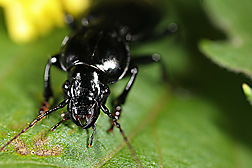 Entomologist Bob Pfannenstiel and other ARS scientists down in Texas have been looking into beneficials that come out and feed at night. The have been doing this for 8 years now and have discovered many interesting things. Like the Asian cockroach, Blattella asahinai is a predatory on moth eggs. They also found nocturnal cursorial spiders to be moth egg predators as well. Learn more by reading the article on the ARS USDA website! Working After Hours A Nighttime View of Insect Predation
Tuesday, September 15, 2009
Syngenta to boost pollinators across Europe
Syngenta (based in Basel, Switzerland) is rolling out a 5 year plan to help provide habitat and food sources for pollinating insects across Europe. Operation Pollinator is based on the success of Operation Bumblebee in the United Kingdom. Within three years, this Syngenta project increased bee populations up to 600% and contributed to the regeneration of rare species such as Bombus ruderatus, previously on the verge of extinction. Read more...Operation Pollinator
Thursday, August 27, 2009
Koppert launches biological control in Ecuador

Koppert, one of the worlds largest producers of beneficial insects and mites is opening a new facility in Ecuador. It will be called Koppert Ecuador Cia. Ltda.
Saturday, August 8, 2009
Diaprepes root weevil
Diaprepes root weevil have been a problem in Florida and Texas for many years. Now they have shown up in California. Luckily there are a few different treatment options available from pesticides to biological control (using beneficial nematodes). University of California has put together an excellent article with all this information. Diaprepes root weevil, a new California pest, will raise costs for pest control and trigger quarantines.

Subscribe to:
Posts (Atom)


 Posts
Posts

